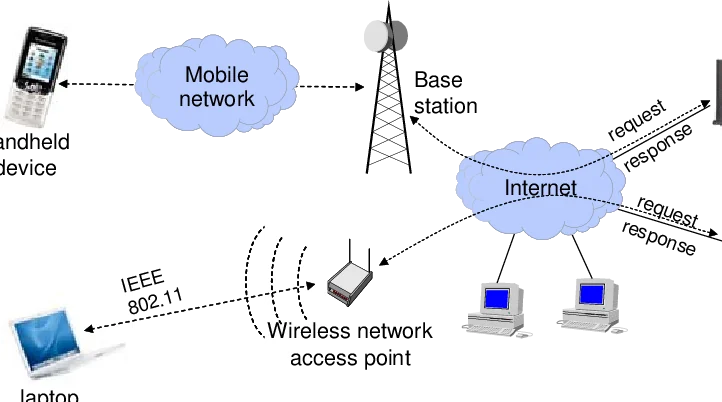
Search results shift depending on where the request comes from. A hotel page in Lisbon quotes one rate to a visitor browsing on a Portuguese carrier and a different one to a request arriving from a server rack in Frankfurt.
Researchers who ignore that gap end up with clean-looking data that describes nobody in particular. Mobile networks have become one of the more dependable ways to collect the honest version, mostly because of how carriers hand out addresses in the first place.
Why carrier addresses get a pass
Most mobile subscribers never get a public IP address to themselves. Carriers push traffic through shared address pools, parking thousands of handsets behind one routable address. AT&T, Vodafone, and Orange all work this way, since there simply aren’t enough IPv4 addresses left to hand out individually.
That has an odd side effect for anyone studying web content at scale. Blocking a single carrier address means blocking an entire neighborhood of paying customers, so most sites won’t take the risk.
Datacenter IPs get the opposite treatment. They belong to Amazon Web Services, DigitalOcean, and Hetzner, and detection vendors keep those ranges in lookup tables that refresh daily. A request from one of them often gets flagged before the page finishes rendering.
The practical case for routing research traffic through a mobile proxy service rather than a rented server comes down to signal quality. The request carries the fingerprint of a phone sitting on a real cell tower, and sites read it as a shopper instead of a scraper.
Precision below the country level
Country-level targeting is the easy part. Every proxy type offers it, and for a rough competitive sweep that’s usually enough.
Metro-level accuracy is where the work gets interesting. Because carrier-grade NAT allocates address blocks by network region, a Madrid connection genuinely routes through Madrid infrastructure. Delivery windows, store inventory, and local pack rankings all key off that detail.
Consider a grocery chain running promotions only in Manchester. A request that geolocates to London sees the national page, misses the campaign, and quietly logs a wrong price. Multiply that across 40 markets and the dataset stops being worth anything.
The web that phones actually see
Google finished rolling out mobile-first indexing to all sites in 2023. The mobile version of a page is now the one that gets crawled and ranked, which means desktop-only research describes a version of the web search engines have largely stopped reading.
And the differences aren’t cosmetic. Mobile pages ship different structured data, different ad inventory, and occasionally a different product catalogue. Airlines and food delivery platforms are the worst offenders here: promo codes surface in the app and on the mobile site, then vanish on desktop.
There’s an audience argument too. Pew Research’s mobile technology fact sheet has tracked a steady group of American adults who own a smartphone but have no home broadband at all, hovering around 15% for years. Desktop-only data collection never sees what those people see.
The tradeoffs nobody advertises
Mobile routing costs real money. Bandwidth pricing runs several times higher than datacenter equivalents, and because carriers rotate addresses on their own schedule, holding one static IP for a long session is difficult to guarantee.
Speed is the other compromise. A 5G connection is fast by consumer standards but still slower than a fibre-connected server, so a job that pulls a million pages overnight probably shouldn’t run on cellular routes.
Sensible teams mix approaches. Datacenter IPs handle bulk crawling of public documentation and pages nobody bothers to protect. Mobile routes get saved for the checks that need to look local: pricing pages, app-only offers, regional search results, ad verification.
Where this is heading
Carriers keep tightening their networks as IPv6 deployment spreads and shared address pools shrink, which will make legitimate mobile routes scarcer and pricier rather than cheaper. Teams that build location logic into their research now will be in better shape than those treating geography as a filter they can bolt on later.
The underlying point is simple enough. A dataset collected from the wrong place isn’t a slightly worse dataset; it’s a description of a market that doesn’t exist.